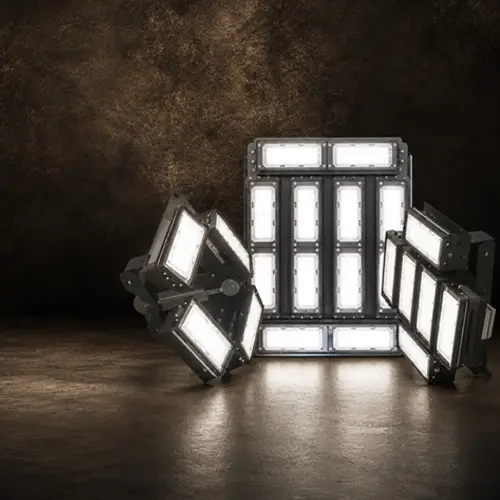
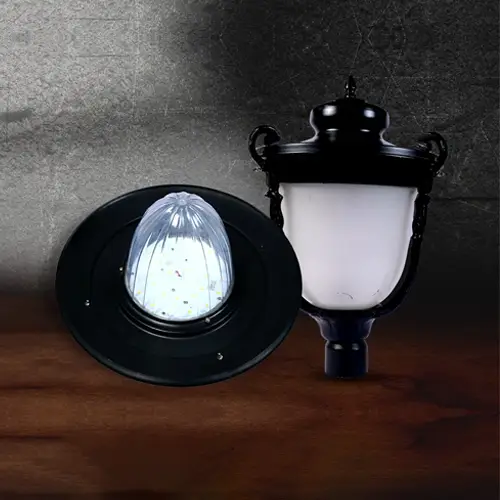
Poles Lights provide the structural foundation and mounting position required to deliver effective illumination across roads, public spaces, landscapes, campuses, parking areas and infrastructure projects. The right combination of lighting poles and luminaires influences mounting height, light distribution, visibility, uniformity, maintenance access and the overall appearance of an outdoor lighting installation.
Goldwyn Limited approaches outdoor lighting as an integrated application requirement rather than treating the pole and luminaire as unrelated components. For architects, electrical consultants, EPC contractors, infrastructure companies and procurement teams, this helps create lighting configurations that respond to the actual site, mounting conditions and illumination objectives.
As an India-based LED lighting manufacturer with PAN India supply capability, Goldwyn supports project requirements involving street lighting, outdoor lighting and pole-mounted LED lighting solutions.
What Are Poles Lights?
Poles Lights are outdoor lighting systems in which luminaires are installed on purpose-selected poles to achieve the required mounting height, coverage and light distribution.
They are commonly used where lighting must cover a larger or clearly defined outdoor area from an elevated mounting position. Typical environments include roads, pathways, parking areas, campuses, industrial premises, parks, public spaces and perimeter zones.
A lighting pole should not be selected only by its height or appearance. Its suitability depends on the complete lighting application, including luminaire configuration, mounting arrangement, site conditions, required illumination and maintenance requirements.
This is why lighting pole selection should be considered as part of the overall outdoor lighting design.
Where Are Lighting Poles Used?
Different outdoor environments create different illumination and mounting requirements. A configuration suitable for a landscaped pathway may not be appropriate for a roadway, industrial perimeter or large parking area.
Street and Roadway Lighting
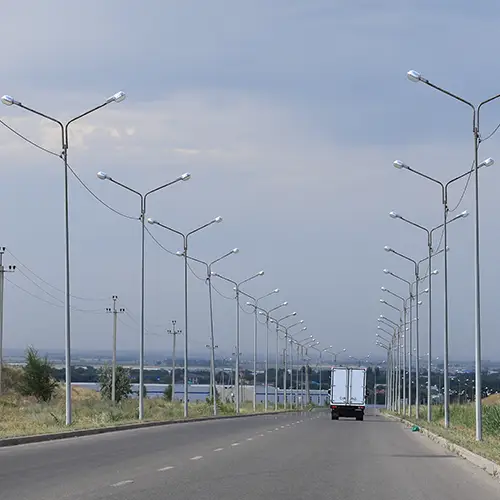
Street light poles provide elevated mounting positions for luminaires used along streets, internal roads and other vehicular routes.
Pole height, spacing, luminaire optics, road geometry and mounting arrangement collectively influence illumination levels and uniformity. Selecting only a high-wattage luminaire without considering these factors can produce excessive brightness in some areas while leaving others inadequately illuminated.
For road lighting projects, street lighting poles should therefore be evaluated together with the photometric characteristics of the selected luminaires.
Parking Area Lighting
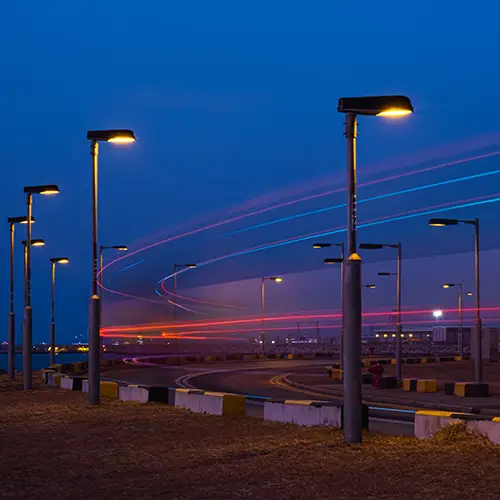
Parking areas require sufficient visibility across vehicle movement zones, pedestrian routes and access points.
Light poles for parking areas should support appropriate mounting positions and light distribution while considering the size and layout of the parking facility. Uniform illumination is particularly important because isolated bright zones surrounded by darker areas can reduce visual comfort and practical visibility.
Public Spaces and Urban Infrastructure
Lighting poles are widely used in public spaces, urban developments and infrastructure projects where functional illumination must often work alongside architectural requirements.
Pole positioning, luminaire form, mounting arrangement and visual proportions can influence how the installation integrates with the surrounding environment.
Decorative light poles may be considered where architectural character is important, while functional road lighting poles may be more appropriate where illumination performance remains the primary objective.
Parks, Gardens and Landscape Areas
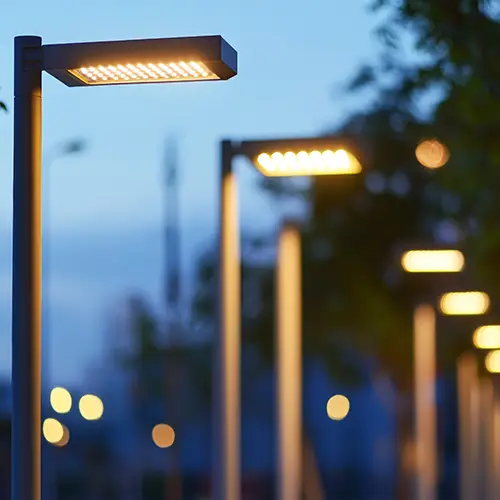
Outdoor light poles used for parks and gardens should support illumination without overwhelming the surrounding landscape.
Pathway lighting, pedestrian areas and landscape zones may require different mounting heights and light distributions compared with roadways. Decorative lighting poles can also contribute to the visual language of landscaped environments while supporting functional illumination.
Campus and Institutional Lighting
Educational campuses, hospitals, corporate campuses and institutional developments often contain multiple outdoor environments within one site.
These can include internal roads, pedestrian paths, parking zones, entrances, open areas and perimeter routes.
Rather than applying one pole configuration throughout the project, lighting designers can evaluate each zone according to its actual function and illumination requirement.
Industrial and Perimeter Areas
Industrial premises may require lighting poles for internal roads, open yards, circulation areas, parking zones and perimeter lighting.
The application environment becomes especially important here. Pole placement and luminaire selection should consider operational activity, required visibility, mounting access and site-specific environmental conditions.
Understanding Different Types of Lighting Poles
There is no universal lighting pole suitable for every outdoor project. The correct configuration depends on the application, scale and design requirement.
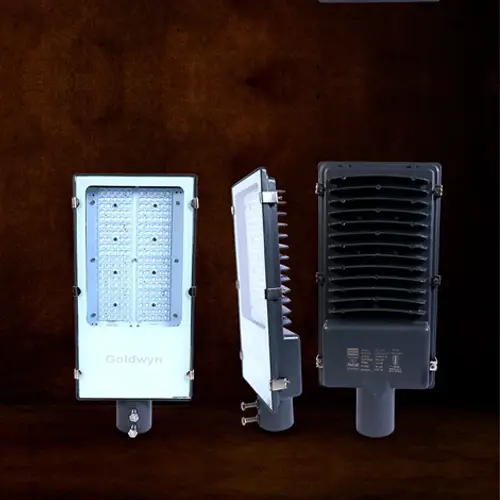
Street Light Poles
Street light poles are designed to support luminaires for roadway and street illumination. Their configuration should be evaluated according to road width, mounting height, luminaire distribution, spacing and required lighting performance.
Outdoor Lighting Poles
Outdoor lighting poles represent a broader category used across commercial spaces, campuses, pathways, parking areas, landscapes and public environments.
Their design can vary according to mounting requirements, project aesthetics and the type of luminaire being installed.
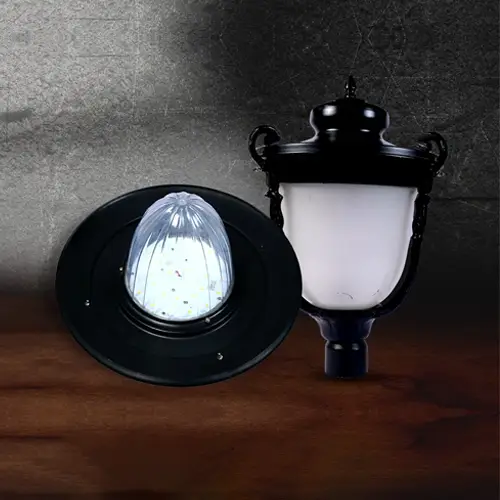
Decorative Light Poles
Decorative light poles combine the functional requirement of luminaire mounting with architectural or landscape considerations.
They can be relevant for parks, promenades, institutional developments, hospitality environments and selected public spaces where the pole remains a visible part of the design language.
The decorative appearance, however, should not compromise lighting performance or practical maintenance.
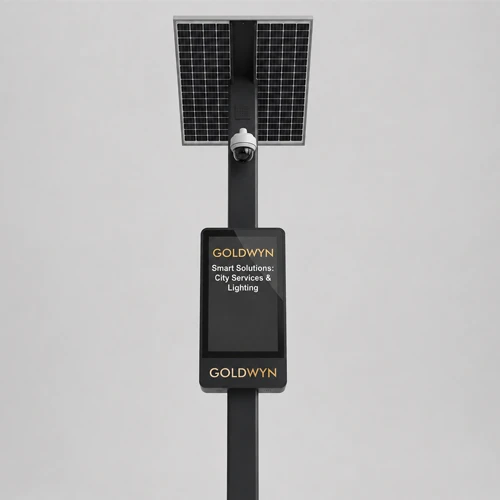
Smart Lighting Poles
Smart lighting poles may form part of connected urban infrastructure where lighting is integrated with suitable control or smart-city systems.
The actual configuration should be determined by the project's technical requirements rather than assuming that every outdoor lighting application needs a smart pole solution.
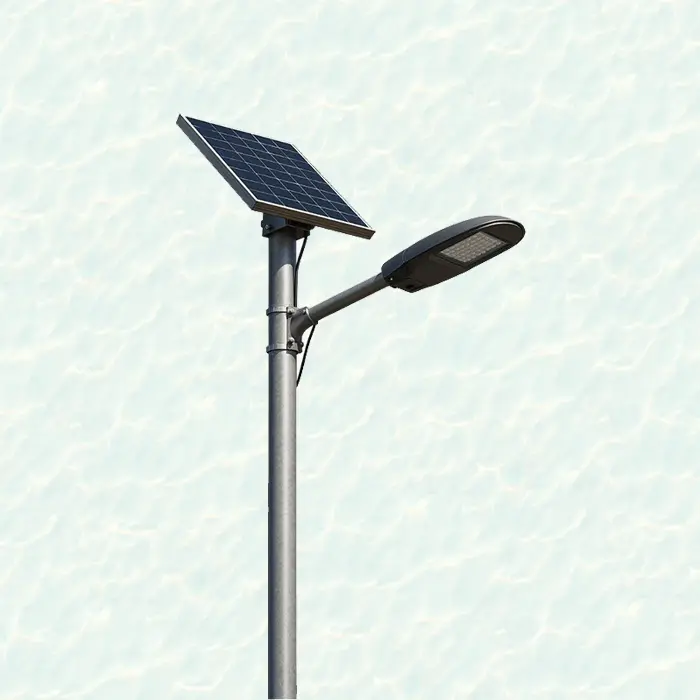
Solar Lighting Poles
Solar lighting poles can support suitable outdoor applications where the lighting configuration incorporates solar energy generation and associated system components.
Suitability depends on the complete solar lighting design, site conditions, expected operating requirements and the configuration of the lighting system.
High Mast Lighting Poles
High mast lighting is intended for large-area illumination where luminaires are mounted at substantially greater heights than conventional street lighting.
Large junctions, transport areas, infrastructure zones and other extensive open spaces may require high mast solutions. High mast and conventional street light poles therefore serve different application requirements and should not be treated as interchangeable systems.
How to Choose the Right Lighting Pole
Selecting a lighting pole requires coordination between structural, lighting, architectural and operational requirements.
For project evaluation, buyers and consultants should consider the following factors.
1. Application Environment
Start with the actual area being illuminated.
A highway, campus road, landscaped pathway, industrial yard and parking facility can have very different requirements even when all use pole-mounted LED lights.
Understanding the environment first helps prevent specification decisions based only on product dimensions.
2. Required Mounting Height
There is no single standard pole height suitable for every project.
The appropriate height depends on factors such as the application, area dimensions, luminaire output, optics, spacing and required illumination.
Pole height should therefore be established through project-specific lighting and engineering considerations rather than selected in isolation.
3. Luminaire and Pole Compatibility
The luminaire and lighting pole should be evaluated as a coordinated system.
Important considerations can include the luminaire's mounting arrangement, physical dimensions, weight, orientation and intended application.
The pole should provide an appropriate mounting configuration for the selected luminaire.
4. Light Distribution and Uniformity
A taller pole does not automatically create better illumination.
Effective outdoor lighting depends on the relationship between mounting height, pole spacing, beam distribution, lumen output and site geometry.
Photometric planning can help determine whether the proposed pole-mounted lighting arrangement provides suitable distribution across the intended area.
5. Environmental Conditions
Outdoor lighting installations are continuously exposed to environmental conditions.
The complete pole and luminaire system should therefore be selected with consideration for the installation environment and project-specific exposure conditions.
The luminaire itself may also require appropriate ingress protection, thermal management, surge protection and other performance characteristics according to the application.
6. Maintenance Access
Maintenance is often considered after installation, when it should be part of the original specification.
Buyers should consider how luminaires will be accessed, inspected and serviced over the operating life of the project.
A lighting system that performs well but creates unnecessary maintenance difficulty can increase long-term operational complexity.
7. Architectural Integration
For landscapes, campuses, public spaces and architectural developments, the visual relationship between the pole, luminaire and surrounding environment can be important.
Pole proportions, mounting arrangement and luminaire design should complement the project without compromising functional illumination.
Pole Mounted LED Lights: Why the Complete System Matters
Pole mounted LED lights perform effectively when the luminaire specification and mounting arrangement are aligned with the application.
Wattage alone cannot determine whether a lighting solution is suitable.
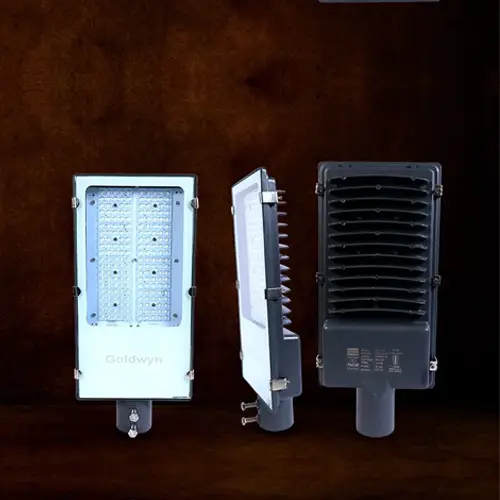
Lighting designers and consultants may also evaluate lumen output, efficacy, optics, beam distribution, CCT, glare, uniformity, ingress protection, driver performance, thermal management and mounting conditions.
For example, increasing lumen output without suitable optical control may create unnecessary brightness without delivering the required distribution across the target area.
Similarly, increasing pole height without reviewing luminaire optics and spacing can alter the lighting result.
The practical objective is therefore not simply to install a powerful luminaire on a pole. It is to establish the right relationship between the light source, mounting height, spacing and application environment.
Lighting Pole Selection Mistakes That Can Affect Project Performance
Many specification problems originate before installation.
One common mistake is selecting poles independently from luminaires. Another is applying the same pole height and spacing across areas with different functional requirements.
Buyers should also avoid assuming that higher wattage automatically compensates for unsuitable pole positioning.
For larger projects, the specification process should evaluate the lighting requirement as a system.
This means considering:
- Area dimensions and site geometry.
- Required illumination and uniformity.
- Pole height and positioning.
- Luminaire output and optics.
- Mounting configuration.
- Environmental exposure.
- Maintenance requirements.
- Architectural considerations where relevant.
This approach gives architects, consultants and EPC contractors a stronger basis for comparing proposed lighting solutions.
Goldwyn Limited's Approach to Poles Lights
Goldwyn Limited supports LED lighting requirements across outdoor, infrastructure, commercial and industrial applications.
The company's approach to Poles Lights focuses on matching lighting requirements with the intended project environment rather than reducing the decision to pole dimensions or luminaire wattage.
Buyers evaluating Goldwyn for a project can review the company's background and lighting expertise through the About Goldwyn Limited.
For architects, electrical consultants, EPC contractors, builders, infrastructure companies and procurement teams, early discussion of the application can help establish the appropriate direction for pole-mounted lighting requirements.
Frequently Asked Questions
What are lighting poles?
Lighting poles are structural supports used to position outdoor luminaires at an appropriate mounting height for illuminating roads, parking areas, pathways, public spaces, landscapes, campuses and other outdoor environments. Their selection should consider the luminaire, mounting arrangement, required illumination and site conditions.
What are light poles used for?
Light poles are used to provide elevated mounting positions for outdoor luminaires. Applications include street lighting, roadway lighting, parking areas, campuses, parks, public spaces, industrial premises, perimeter areas and landscape environments.
Which pole is best for street lighting?
There is no single pole configuration that is best for every street. Selection depends on road dimensions, required illumination, luminaire optics, mounting height, spacing, site conditions and project specifications. The pole and street light should be evaluated together.
What is the standard height of a light pole?
Light pole height varies according to the application. Roadways, pathways, parking areas, landscapes and large open spaces can require different mounting heights. Rather than applying one standard height, the specification should be based on lighting design, site geometry and luminaire performance.
What is the difference between high mast and street light poles?
Street light poles are generally used for conventional roadway and area-lighting applications, while high mast systems position multiple luminaires at considerably greater heights to illuminate extensive areas. The appropriate solution depends on the scale and geometry of the area requiring illumination.
Which lighting poles are suitable for parking areas?
Parking-area pole selection depends on the size and layout of the facility, required visibility, mounting height, luminaire distribution and desired uniformity. Pole positions should be coordinated with vehicle circulation and pedestrian areas.
Are solar light poles suitable for street lighting?
Solar lighting poles can be suitable for certain street and outdoor lighting applications when the complete solar lighting system is appropriately designed for the site and operating requirement. Suitability should be evaluated according to project-specific technical and environmental conditions.