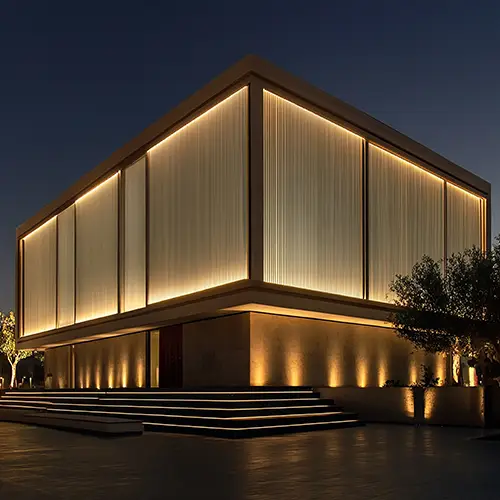
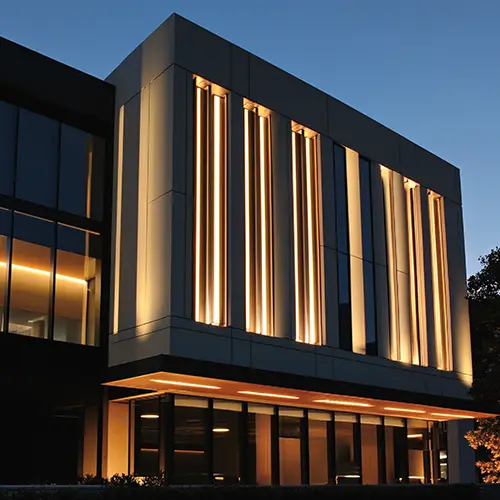
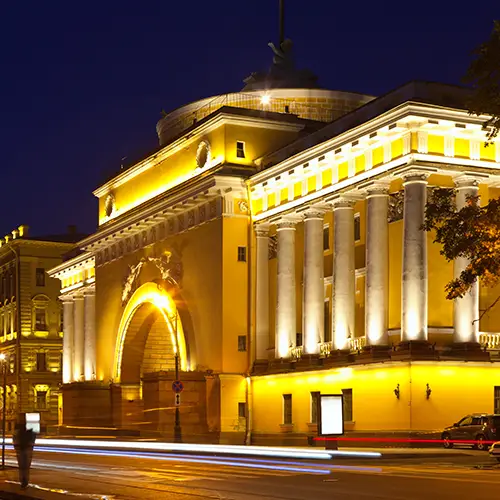
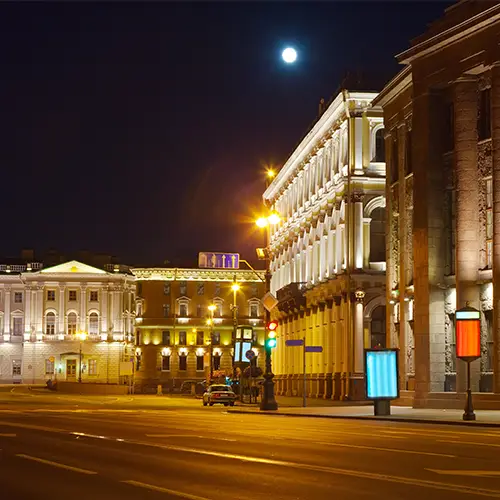
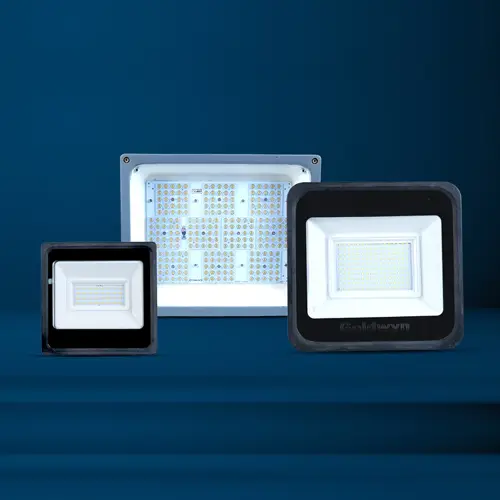
Modern buildings are no longer judged only by their architecture during the day. After sunset, lighting becomes one of the strongest elements that defines a building's identity. Well-designed facade lights highlight architectural details, improve visual appeal, strengthen brand presence, and enhance the overall perception of commercial, institutional, and public infrastructure.
Goldwyn Limited manufactures LED facade lights designed for architectural illumination across a wide range of outdoor applications. Our solutions are developed to combine visual impact with reliable performance, helping architects, lighting consultants, EPC contractors, developers, and project owners achieve consistent illumination while maintaining energy efficiency and long service life.
Whether the requirement is to accentuate a modern commercial complex, illuminate a heritage structure, enhance a hospitality project, or create dynamic lighting for public infrastructure, facade lighting systems should deliver both aesthetic excellence and dependable performance under outdoor operating conditions.
For more information about our company and manufacturing approach, visit our About Us page.
What Are Facade Lights?
Facade lights are specialized outdoor LED lighting fixtures designed to illuminate the exterior surfaces of buildings and structures. Their purpose is not simply to provide brightness but to enhance architectural character, emphasize design elements, create visual depth, and improve nighttime visibility.
Unlike conventional outdoor lighting, facade lighting focuses on controlled illumination. The lighting design considers beam angles, mounting positions, light distribution, colour temperature, and the architectural geometry of the building to produce an attractive and balanced appearance.
LED facade lighting is widely used because it offers:
- Low power consumption
- Long operational life
- Uniform light output
- Flexible lighting control options
- Reduced maintenance requirements
- Excellent performance in outdoor environments
A properly planned facade lighting system can transform an ordinary structure into a distinctive architectural landmark without excessive energy consumption.
Why LED Facade Lighting Has Become the Preferred Choice
Traditional facade lighting technologies often required higher energy consumption and more frequent maintenance. Modern LED technology has significantly improved both operational efficiency and design flexibility.
Some of the key advantages include:
Superior Energy Efficiency
LED facade lights consume substantially less electricity while producing high-quality illumination. This helps reduce operating costs, particularly for commercial buildings where lighting operates for extended hours.
Consistent Architectural Appearance
High-quality optical systems deliver controlled light distribution that minimizes uneven brightness, hotspots, and excessive glare. This creates a cleaner and more refined visual presentation.
Long Service Life
LED fixtures generally operate for significantly longer durations than conventional lighting technologies, reducing replacement frequency and maintenance interruptions.
Weather Resistance
Exterior lighting systems are continuously exposed to rain, dust, humidity, heat, and environmental pollution. Well-designed facade lights use robust housing materials and weather-resistant construction suitable for outdoor installations.
Design Flexibility
Architectural lighting projects often require varying beam angles, mounting options, colour temperatures, and lighting effects. LED technology provides greater flexibility to accommodate diverse project requirements.
Reduced Maintenance
Long operating life combined with durable construction helps lower maintenance requirements, making LED facade lighting suitable for large commercial and institutional developments.
Applications of Facade Lights
Architectural facade lighting is used across numerous industries where building appearance contributes to branding, safety, and visitor experience.
Commercial Buildings
Corporate offices, IT parks, shopping complexes, and mixed-use developments use facade lighting to create an attractive nighttime identity while maintaining professional aesthetics.
Hotels and Hospitality Projects
Hotels, resorts, banquet venues, and premium hospitality developments rely on facade lighting to enhance guest experience and strengthen visual appeal after dark.
Educational Institutions
Universities, schools, and research campuses often illuminate important buildings to improve visibility and showcase architectural features.
Hospitals and Healthcare Facilities
Controlled facade lighting can improve building visibility while maintaining an appropriate professional appearance without excessive brightness.
Government Buildings
Administrative offices, civic centres, public institutions, and government infrastructure frequently incorporate facade lighting for improved visibility and architectural presentation.
Religious and Heritage Structures
Architectural lighting helps highlight historical details while respecting the character of monuments, temples, churches, mosques, and other culturally significant structures.
Airports, Metro Stations and Transport Infrastructure
Transportation projects often require reliable exterior lighting solutions capable of operating continuously under demanding environmental conditions.
Residential Communities
Premium residential towers, gated communities, clubhouses, and luxury developments increasingly use facade lighting to enhance property value and improve nighttime aesthetics.
Technical Considerations When Selecting Facade Lights
Choosing facade lights involves much more than selecting fixture appearance. Performance depends on several engineering and application-specific factors.
Beam Angle Selection
The beam angle determines how light is distributed across the building surface.
Narrow beam angles are generally suitable for highlighting columns, sculptures, and architectural details, while wider beam angles provide broader wall illumination.
The correct beam angle depends on mounting distance, building height, facade texture, and lighting objectives.
Colour Temperature
Colour temperature significantly influences the visual character of a building.
Warm white lighting often complements heritage buildings, hospitality projects, and premium residential developments.
Neutral and cool white lighting may be preferred for commercial buildings, offices, and contemporary architecture where a cleaner appearance is desired.
Colour Rendering Index (CRI)
CRI measures how accurately colours appear under artificial lighting.
Higher CRI values help preserve the natural appearance of construction materials such as stone, glass, wood, aluminium panels, and textured finishes, making them especially valuable for architectural applications.
IP Rating
Outdoor facade lighting must withstand challenging environmental conditions.
A suitable IP-rated fixture provides protection against dust ingress and water exposure, contributing to long-term reliability in outdoor installations.
Lighting Design Considerations for Facade Lighting Projects
Successful facade lighting is achieved through careful planning rather than selecting fixtures alone. A lighting system should complement the architecture, enhance visibility, and maintain a balanced appearance without creating excessive brightness or light pollution.
Building Architecture
Every building has unique design elements that influence the lighting approach. Glass facades, concrete elevations, metal cladding, stone finishes, and textured surfaces all interact differently with light. Understanding these materials helps determine the appropriate lighting technique.
Mounting Position
Fixture placement directly affects illumination quality. Depending on the architectural design, facade lights may be mounted at ground level, on walls, under canopies, within landscape features, or integrated into structural elements. Proper positioning helps achieve uniform lighting while concealing fixtures from direct view.
Lighting Uniformity
Uneven illumination can distract from the architectural design. Well-planned lighting distributes brightness consistently across the facade while maintaining emphasis on important architectural features.
Glare Control
Exterior lighting should enhance the viewing experience without causing discomfort to pedestrians, occupants, or nearby traffic. Fixtures with well-designed optics help direct light precisely where it is needed.
Environmental Conditions
Outdoor lighting systems operate continuously in changing weather conditions. Factors such as rainfall, dust, humidity, coastal environments, temperature fluctuations, and pollution should be considered when selecting suitable facade lighting fixtures.
Energy Consumption
Commercial buildings often operate facade lighting for several hours every evening. Energy-efficient LED systems help reduce electricity costs while maintaining consistent illumination throughout the building's operating life.
Types of LED Facade Lights
Different architectural projects require different lighting solutions. Selecting the appropriate fixture depends on the building design, installation environment, and desired visual effect.
Linear LED Facade Lights
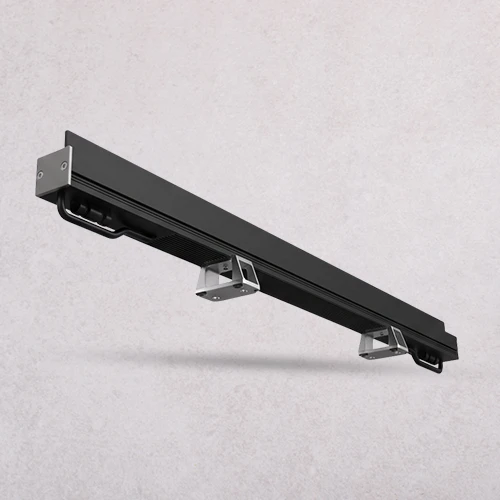
Linear fixtures create continuous illumination along walls, edges, columns, and architectural lines. They are commonly used for commercial buildings, hotels, shopping centres, and modern office complexes.
Wall Washer Lights
Wall washer lights distribute light evenly across large vertical surfaces. They are suitable for highlighting expansive building facades without creating visible hotspots.
Wall Grazing Lights
Wall grazing fixtures are positioned close to textured surfaces, allowing light to accentuate stone, brick, concrete, and other architectural materials with depth and shadow.
RGB and Dynamic Facade Lighting
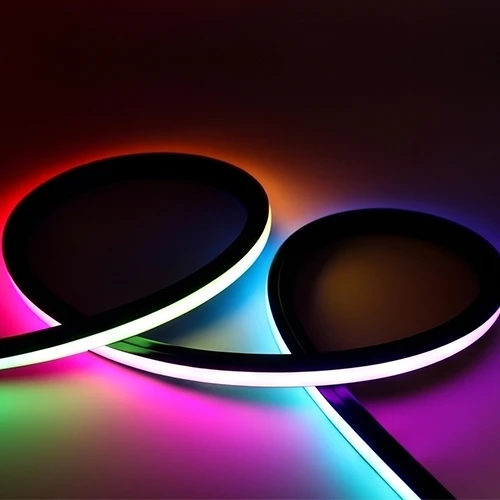
Projects requiring changing colours or programmable lighting effects often use RGB or RGBW facade lighting systems. These are commonly installed in entertainment venues, hospitality projects, public landmarks, and iconic commercial buildings.
Spot Facade Lights
Spotlights provide focused illumination for statues, entrance features, signage, columns, and decorative architectural elements that require visual emphasis.
How to Choose the Right Facade Lighting Solution
Selecting facade lighting involves evaluating the complete project rather than comparing fixture specifications alone.
A systematic approach can help ensure better long-term performance.
Define the Lighting Objective
Determine whether the project aims to highlight architectural details, improve visibility, create a signature nighttime appearance, strengthen brand identity, or combine multiple objectives.
Understand the Building Design
Building height, facade materials, surface texture, architectural complexity, and surrounding environment all influence fixture selection and lighting layout.
Evaluate Optical Performance
Beam angle, light distribution, lumen output, colour consistency, and glare control should align with the architectural requirements rather than relying solely on higher brightness.
Consider Environmental Protection
Outdoor lighting should be selected according to environmental exposure, including rainfall, dust, humidity, coastal conditions, and operating temperatures.
Plan for Maintenance
Accessible installation locations, durable construction, and long operating life reduce maintenance requirements and simplify future servicing.
Review Control Requirements
Some projects require basic on/off operation, while others may integrate dimming, programmable scenes, RGB effects, timers, or centralized lighting management systems.
Industries That Use Facade Lighting
Architectural facade lighting supports a wide variety of sectors where appearance, visibility, and brand presentation are important.
Industries that commonly incorporate facade lighting include:
- Commercial Real Estate
- Hospitality and Tourism
- Retail Developments
- Healthcare Facilities
- Educational Institutions
- Residential Townships
- Government Infrastructure
- Airports and Transportation Hubs
- Cultural and Heritage Projects
- Industrial Campuses
- Corporate Headquarters
- Entertainment and Convention Centres
Each application has different lighting objectives, making project-specific planning essential for achieving the desired visual outcome.
Why Choose Goldwyn Limited for Facade Lights
Goldwyn Limited manufactures LED lighting solutions with a focus on performance, reliability, and application-specific requirements. Rather than offering a one-size-fits-all product, our approach considers how lighting will function within the intended architectural environment.
Our facade lighting solutions are developed to support the needs of architects, consultants, EPC contractors, developers, and institutional buyers seeking dependable lighting systems for commercial and infrastructure projects across India.
Key aspects of our approach include:
- LED facade lighting solutions designed for diverse architectural applications.
- Product options suitable for commercial, institutional, hospitality, infrastructure, and industrial projects.
- Attention to optical performance, durability, and energy efficiency.
- Support for project-specific lighting requirements and customization where applicable.
- PAN India supply for bulk and project-based requirements.
- Technical assistance during product selection to help align lighting solutions with project objectives.
Learn more about Goldwyn Limited and our approach to LED lighting manufacturing by visiting:
Quality and Manufacturing Approach
The long-term performance of facade lighting depends not only on LED technology but also on manufacturing quality, component selection, thermal management, and engineering design.
Goldwyn Limited emphasizes a structured manufacturing approach aimed at delivering consistent product quality.
Important considerations include:
Thermal Management
Effective heat dissipation helps maintain lumen output, colour consistency, and component reliability throughout the operational life of the fixture.
Optical Design
Precision optics contribute to controlled beam distribution, reducing unnecessary light spill while enhancing architectural features.
Material Selection
Outdoor fixtures require corrosion-resistant housing materials and durable finishes capable of withstanding challenging environmental conditions.
Electrical Reliability
Quality drivers and electrical components support stable operation while helping protect the lighting system from voltage fluctuations and outdoor operating conditions.
Consistent Manufacturing Standards
Maintaining consistency in production processes contributes to uniform product performance across multiple fixtures installed within the same project.
Project Planning Considerations
Architectural lighting delivers the best results when it is incorporated during the early stages of project planning rather than after construction is complete.
Before finalizing a facade lighting system, project teams should evaluate:
- Architectural drawings and elevations.
- Mounting locations and accessibility.
- Electrical infrastructure.
- Lighting control requirements.
- Desired visual effects.
- Environmental conditions.
- Maintenance accessibility.
- Future expansion requirements.
- Energy consumption objectives.
- Long-term operational costs.
Considering these factors early helps reduce installation challenges while improving the overall effectiveness of the lighting system.
Frequently Asked Questions (FAQs)
1. Can facade lights withstand outdoor weather conditions?
Yes. Quality LED facade lights are designed for outdoor use with appropriate ingress protection (IP) ratings and durable construction. Selecting fixtures with suitable weather resistance helps ensure reliable performance in rain, dust, humidity, and varying environmental conditions.
2. Are LED facade lights energy efficient?
Yes. LED facade lighting consumes significantly less power than many conventional lighting technologies while providing consistent illumination and a longer operational life. This helps reduce electricity consumption and lowers long-term maintenance costs.
3. Can facade lighting be customized for different projects?
Many architectural lighting projects require customized solutions based on building dimensions, mounting conditions, beam angles, colour temperatures, control systems, and desired lighting effects. Product selection should always align with the project's architectural and technical requirements.
4. Which industries commonly use facade lighting?
Facade lighting is widely used in:
- Commercial buildings
- Hotels and resorts
- Shopping malls
- Educational campuses
- Hospitals
- Government buildings
- Airports and transport infrastructure
- Industrial facilities
- Residential developments
- Heritage and cultural projects
5. What factors should be considered before selecting facade lights?
Important considerations include:
- Building architecture
- Mounting location
- Beam angle
- Colour temperature
- IP rating
- Optical performance
- Environmental conditions
- Maintenance accessibility
- Lighting control requirements
- Long-term operating efficiency
Evaluating these factors helps ensure the lighting system meets both aesthetic and functional objectives.
6. Do facade lights require frequent maintenance?
Modern LED facade lights are designed for long operational life and reduced maintenance. Regular inspections and periodic cleaning are generally sufficient to maintain performance, although maintenance schedules may vary depending on the installation environment.
7. Does Goldwyn Limited supply facade lights across India?
Yes. Goldwyn Limited supplies LED lighting solutions for commercial, industrial, institutional, and infrastructure projects across India. Product recommendations are based on project requirements, application environment, and technical specifications.