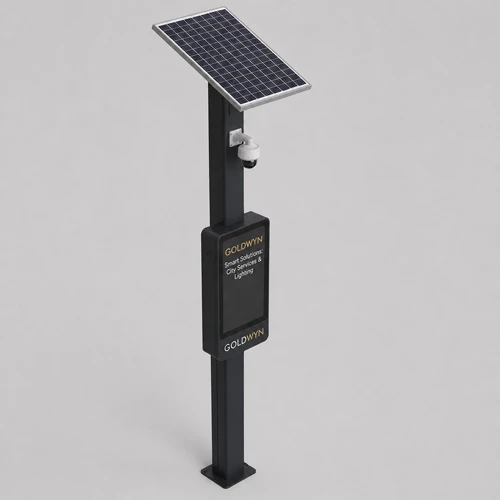
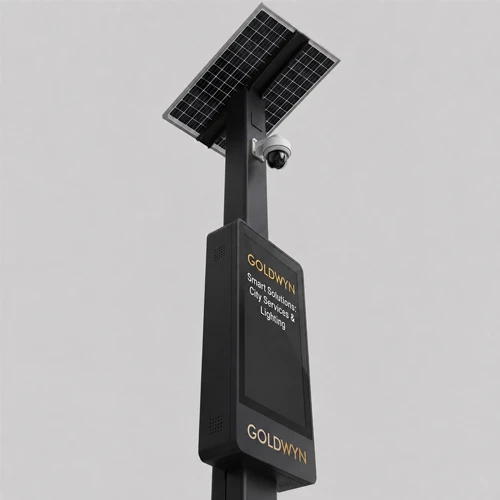
Smart Poles for Intelligent Urban Infrastructure
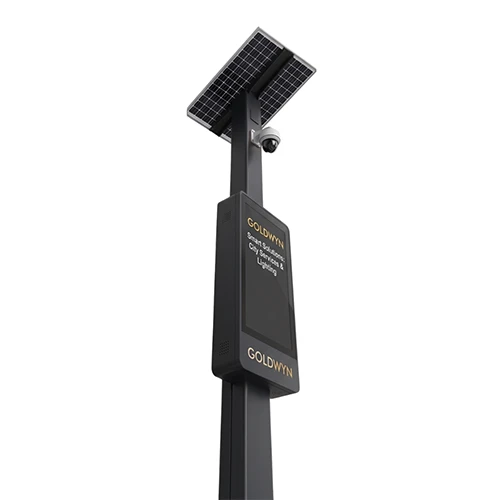
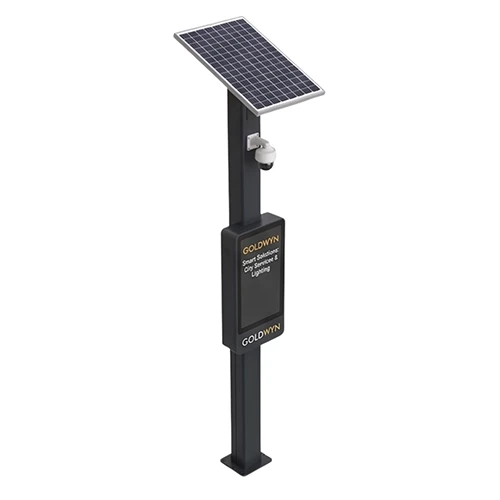
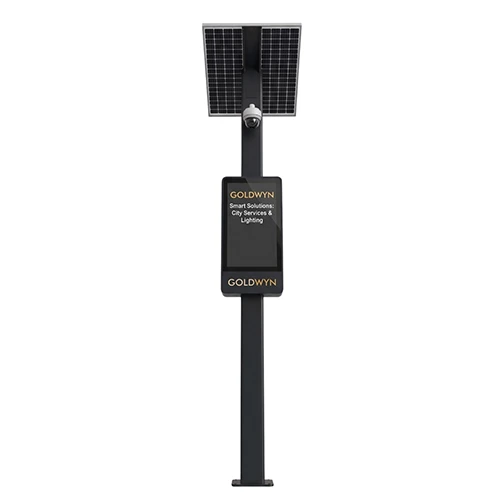
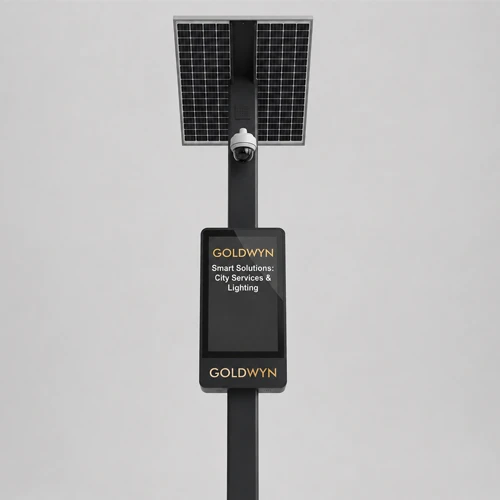
A Smart Pole is more than a lighting structure—it is a multifunctional urban infrastructure solution that combines LED lighting with intelligent technologies to support safer, smarter, and more connected public spaces. Designed to accommodate multiple digital services within a single structure, smart poles help cities optimize infrastructure while improving operational efficiency and public convenience.
Goldwyn Limited manufactures Smart Poles engineered for modern infrastructure projects, integrating reliable structural design with intelligent lighting solutions. Suitable for Smart City Projects, highways, commercial developments, industrial campuses, transportation hubs, and public spaces, these poles support evolving urban requirements while maintaining long-term durability and performance.
Whether the project requires Smart Street Lighting, CCTV Integrated Poles, Smart City Lighting Poles, or customized Multi-Functional Smart Poles, Goldwyn provides solutions designed for future-ready infrastructure.
| System | Functionality |
| Smart Lighting Control | Remote lighting control & monitoring |
| Weather Station | Real-time environmental monitoring |
| Cameras & Surveillance | Traffic & security monitoring |
| Wireless AP | Public Wi-Fi access |
| Information Display | Remote content display |
| DSRC Vehicle Monitoring | Smart traffic management |
| Emergency Call | Emergency communication & location |
| Mini Base Station | Cellular network support |
| AC Charging Station | Electric vehicle charging |
What is a Smart Pole?
A Smart Pole is an advanced lighting pole that integrates LED street lighting with various digital technologies and public utility systems. Unlike a conventional Street Lighting Pole, a smart pole serves multiple functions by supporting communication, surveillance, environmental monitoring, traffic management, and other intelligent city applications through a single infrastructure asset.
Modern Intelligent Poles help reduce urban infrastructure clutter by combining multiple services into one installation while supporting efficient city management and improved public safety.
Typical applications includes Smart Cities, Urban RoadsCommercial Business Districts, Transportation Hubs, Public Parks, Industrial Campuses, Airports, Educational Institutions, Government Infrastructure and Highways.
Key Features of Smart Poles
Intelligent LED Street Lighting
At the core of every Smart Pole is an energy-efficient LED lighting system designed to provide uniform illumination while reducing energy consumption. Intelligent lighting controls can support scheduled operation, adaptive brightness, and centralized management depending on project requirements.
Multi-Functional Infrastructure
One of the biggest advantages of Smart Utility Poles is their ability to accommodate multiple public infrastructure components on a single pole.
Depending on project requirements, Smart Poles may support:
- LED Street Lights
- CCTV Cameras
- Public Wi-Fi Equipment
- Emergency Communication Systems
- Environmental Sensors
- Digital Signage
- Traffic Monitoring Devices
- EV Charging Integration
- Public Address Systems
- Smart Control Units
This integrated approach simplifies urban infrastructure while reducing the need for multiple standalone installations.
Durable Structural Design
Goldwyn designs Smart Street Poles with structural stability in mind. Since these poles often carry multiple devices, their design considers equipment load, wind resistance, mounting arrangements, and long-term outdoor performance.
Corrosion Resistant Construction
Outdoor infrastructure must withstand continuous exposure to sunlight, rain, pollution, humidity, and varying weather conditions.
Galvanized steel construction helps protect Smart Poles against corrosion, supporting long operational life with reduced maintenance requirements.
Flexible Integration
Every Smart City project has different operational objectives.
Goldwyn offers Custom Smart Poles capable of supporting different combinations of lighting equipment, surveillance systems, communication devices, signage, and other smart technologies based on project requirements.
Types of Smart Poles
Smart Street Lighting Poles
Designed primarily for intelligent road illumination while supporting future smart city technologies.
CCTV Integrated Poles
Provide structural support for surveillance systems while combining lighting and monitoring functions into a single installation.
Smart City Lighting Poles
Developed for integrated urban infrastructure where lighting, communication, public safety, and monitoring systems operate together.
Decorative Smart Poles
Ideal for commercial districts, parks, tourism zones, and premium public spaces where aesthetics and intelligent functionality are equally important.
Ultra Modern Poles
Modern architectural pole designs that complement contemporary urban developments while supporting multiple intelligent technologies.
Solar Smart Poles
Combine solar-powered lighting with smart monitoring and intelligent control systems for locations where renewable energy solutions are preferred.
Applications of Smart Poles
Smart Poles are transforming conventional lighting infrastructure into intelligent urban assets capable of supporting multiple public services. Their ability to integrate lighting, communication, surveillance, and digital technologies makes them suitable for a wide range of infrastructure projects.
Smart City Projects
Smart Poles are a key component of Smart City Infrastructure, supporting connected public services through a single integrated platform. They help municipalities reduce infrastructure congestion while enabling intelligent urban management.
Typical smart city applications include:
- Smart Street Lighting
- CCTV Surveillance
- Environmental Monitoring
- Public Wi-Fi
- Emergency Communication
- Traffic Monitoring
- Digital Information Displays
Urban Roads and Highways
Modern road networks require more than illumination alone. Smart Street Poles provide reliable LED lighting while supporting traffic management systems, surveillance equipment, and intelligent monitoring devices that enhance road safety and operational efficiency.
Commercial Business Districts
Commercial centres, IT parks, financial districts, and mixed-use developments benefit from Smart Lighting Poles that combine architectural aesthetics with intelligent functionality. These poles contribute to improved visibility, security, and connected infrastructure while reducing the need for multiple standalone installations.
Airports, Railway Stations and Transport Hubs
Transportation infrastructure demands dependable lighting and real-time monitoring.
Smart Poles can support:
- Passenger information systems
- Security surveillance
- Public announcement equipment
- Intelligent lighting controls
- Communication devices
This integrated approach helps improve passenger experience while supporting efficient facility management.
Industrial and Manufacturing Campuses
Large industrial facilities require intelligent outdoor infrastructure for internal roads, logistics areas, parking spaces, and security zones.
Smart Utility Poles support:
- LED area lighting
- CCTV monitoring
- Access control systems
- Emergency communication
- Environmental sensors
These capabilities contribute to safer and more efficient industrial operations.
Public Parks and Recreational Spaces
Modern parks increasingly incorporate Decorative Smart Poles that combine aesthetic appeal with public utility functions. Depending on project requirements, these poles can support lighting, surveillance, Wi-Fi access, charging points, and emergency communication systems while enhancing visitor safety.
Educational Institutions and Government Campuses
Universities, government complexes, research centres, and institutional campuses use Smart Poles to improve security, energy efficiency, and campus-wide connectivity while maintaining organized outdoor infrastructure.
Technical Considerations When Selecting Smart Poles
Choosing the right Smart Pole requires careful evaluation of both structural and technological requirements. Since these poles support multiple integrated systems, their design must address functionality, durability, and future scalability.
Structural Strength
Unlike conventional lighting poles, Smart City Lighting Poles often carry multiple devices and equipment. Their structural design should account for:
- Pole height
- Equipment load
- Wind resistance
- Mounting arrangements
- Future expansion requirements
Proper structural engineering ensures reliable long-term performance under varying environmental conditions.
Equipment Integration Capacity
Every Smart Pole project has unique technology requirements.
Before selecting a pole, buyers should identify the systems that need to be integrated, such as:
- LED lighting
- CCTV cameras
- Public Wi-Fi
- Environmental sensors
- Traffic monitoring devices
- Digital displays
- Communication equipment
Planning integration requirements early helps simplify installation and future upgrades.
Corrosion Protection
Outdoor Smart Poles operate continuously in changing weather conditions.
Hot-dip galvanized steel construction provides excellent protection against corrosion, helping extend service life while reducing maintenance requirements, particularly in coastal, industrial, and high-humidity environments.
Power and Connectivity Planning
Since Smart Poles support multiple technologies, infrastructure planning should consider:
- Electrical supply
- Data connectivity
- Control systems
- Maintenance accessibility
- Equipment compatibility
A well-planned power and communication network contributes to reliable operation and easier system management.
Future Scalability
Technology requirements continue to evolve.
Selecting Multi-Functional Smart Poles capable of accommodating future devices and intelligent systems allows cities and infrastructure developers to upgrade services without replacing the entire pole structure.
How to Choose the Right Smart Pole
Selecting the appropriate Smart Pole involves understanding both present operational requirements and future infrastructure objectives.
Identify Project Objectives
Different projects require different smart infrastructure capabilities.
Examples include:
- Smart city development
- Highway monitoring
- Commercial campuses
- Industrial facilities
- Public parks
- Government infrastructure
- Transportation hubs
Clearly defining project goals helps determine the most suitable Smart Pole configuration.
Evaluate Integration Requirements
Before procurement, buyers should identify:
- Lighting requirements
- Surveillance needs
- Communication systems
- Sensor integration
- Digital display requirements
- Future expansion possibilities
This ensures the selected pole supports both current and long-term operational needs.
Consider Lifecycle Value
Rather than focusing only on procurement cost, evaluate the overall lifecycle performance of the Smart Pole.
Important considerations include:
- Structural durability
- Corrosion resistance
- Integration flexibility
- Maintenance accessibility
- Energy efficiency
- Upgrade capability
- Long-term operational reliability
A well-designed Smart Pole provides lasting value by supporting multiple public services through a single infrastructure investment.
Why Choose Goldwyn for Smart Poles?
Goldwyn Limited manufactures Smart Poles that combine robust structural engineering with intelligent lighting solutions for modern infrastructure projects. Designed to support Smart City, commercial, industrial, and government applications, Goldwyn's Smart Poles are engineered for durability, flexibility, and future-ready integration.
Goldwyn's capabilities include:
- Smart Pole manufacturing
- LED lighting design and engineering
- Custom Smart Pole configurations
- Integrated outdoor lighting solutions
- Standard manufacturing quality control
- ISO 14001:2015 certified environmental management system
- ISO 45001:2018 certified occupational health and safety management system
- ISO/IEC 17025:2017 laboratory competence certification
- PAN India project support
- Solutions for infrastructure, commercial, industrial, hospitality, and government sectors
To learn more about Goldwyn's expertise, buyers can visit the About Us page. Related solutions such as Street Lights, Solar Street Lights, Flood Lights, Industrial LED Lights, and the Outdoor Lighting category can help create complete intelligent lighting infrastructure. Buyers may also refer to the Best Lighting for Commercial Buildings blog for additional planning insights.
For technical consultation, customized Smart Pole configurations, or project-specific quotations, buyers can connect with Goldwyn through the Contact Us page.
Frequently Asked Questions (FAQs)
1. What technologies can be integrated into a Smart Pole?
Depending on project requirements, Smart Poles can support:
- LED Street Lights
- CCTV Cameras
- Public Wi-Fi Equipment
- Environmental Monitoring Sensors
- Traffic Monitoring Systems
- Digital Signage
- Emergency Communication Systems
- Public Address Systems
- EV Charging Modules
- Smart Lighting Controllers
The final configuration depends on the project's operational objectives and infrastructure requirements.
2. Can Smart Poles be customised?
Yes. Goldwyn Limited offers Custom Smart Pole Solutions designed to meet specific project requirements. Customization may include pole height, structural configuration, mounting arrangements, integrated equipment, lighting systems, surface finish, and additional smart technology modules.
3. Which industries use Smart Poles?
Smart Poles are suitable for a wide range of sectors, including:
- Smart City Infrastructure
- Government Projects
- Commercial Developments
- Industrial Facilities
- Educational Institutions
- Hospitals
- Airports
- Railway Stations
- Residential Townships
- Public Parks
- Transportation Hubs
Their versatility makes them an ideal solution wherever intelligent outdoor infrastructure is required.
4. What factors should be considered before selecting a Smart Pole?
Important evaluation criteria include structural strength, equipment integration capacity, corrosion resistance, power and data connectivity, future scalability, maintenance accessibility, and compatibility with lighting and smart technology systems. Assessing these factors helps ensure reliable long-term performance.
5. Are Smart Poles energy efficient?
Yes. Smart Poles typically incorporate LED lighting systems, which consume significantly less energy than conventional lighting technologies. When combined with intelligent lighting controls such as dimming schedules, occupancy sensing, or remote monitoring, they can further optimize energy consumption based on operational requirements.
6. Can Smart Poles support future technology upgrades?
Yes. One of the key advantages of Multi-Functional Smart Poles is their ability to accommodate future technologies. Additional devices or upgraded equipment can often be integrated without replacing the primary pole structure, making them suitable for evolving smart infrastructure projects.
7. How can I request a quotation for Smart Poles?
You can contact Goldwyn's technical and sales team by sharing your project requirements, installation environment, preferred pole configuration, integrated technologies, quantity, and technical specifications. Based on your application, the team can recommend an appropriate Smart Pole solution and provide a customized quotation.