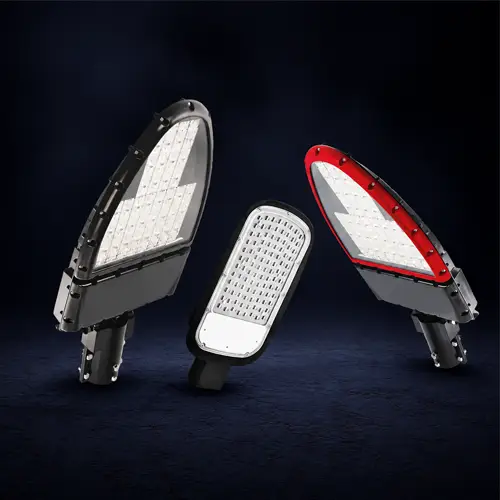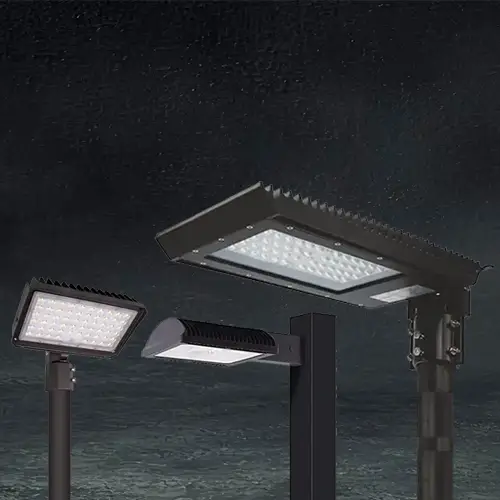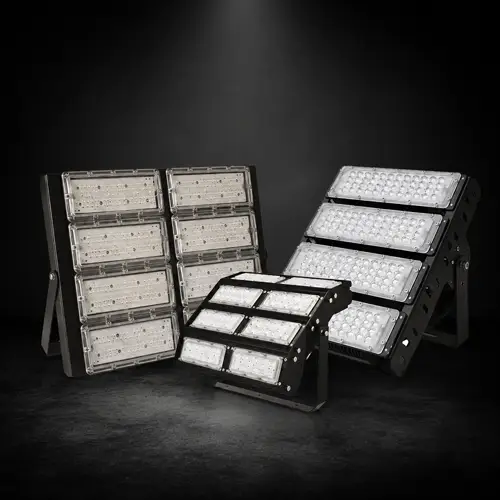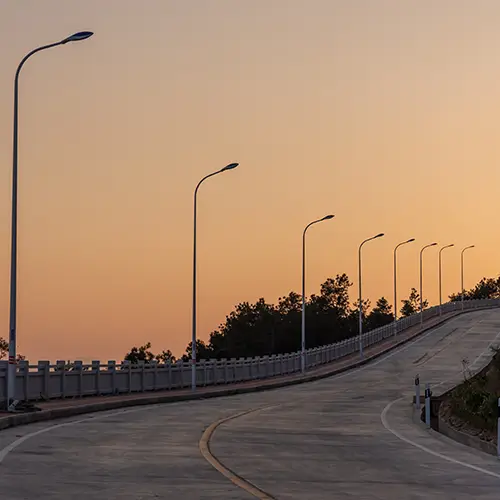
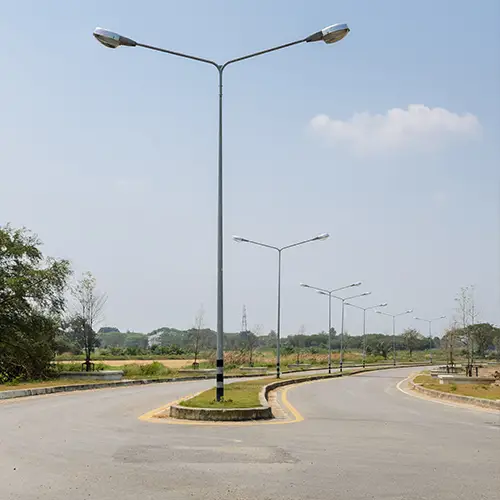
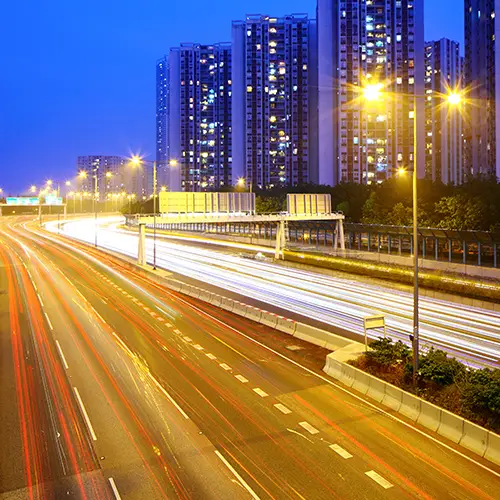
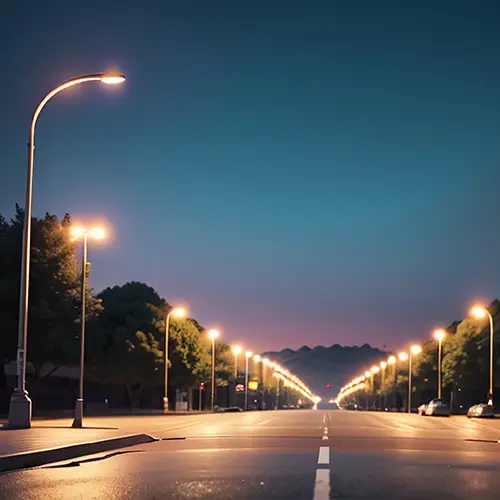
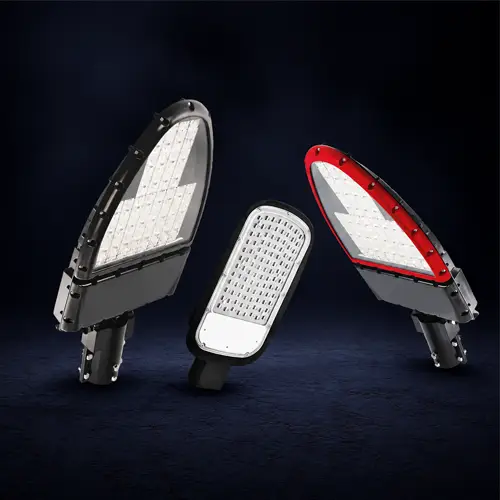
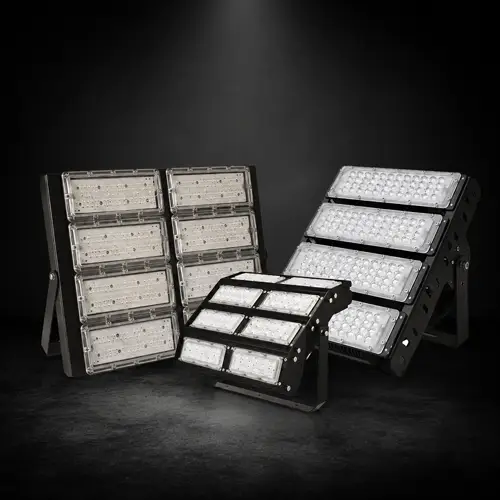
Street Light systems provide controlled outdoor illumination for roads, highways, internal streets, campuses, industrial premises and public infrastructure. Effective street lighting depends on more than selecting an LED luminaire by wattage. Mounting height, road geometry, optics, lumen output, lighting uniformity, glare control, environmental conditions and pole spacing collectively influence how well a road is illuminated.
Goldwyn Limited is an India-based LED lighting manufacturer supporting street lighting requirements for architects, electrical consultants, EPC contractors, infrastructure companies, government buyers, builders and industrial procurement teams.
The objective of a well-planned LED street lighting system is straightforward: deliver the required illumination where it is needed while controlling energy consumption, glare and long-term maintenance requirements.
What is a Street Light?
A street light is an outdoor luminaire designed to illuminate roads, streets and other vehicular or pedestrian circulation areas from an elevated mounting position. Modern LED street lights use LED light sources, drivers and optical systems to distribute illumination across the intended roadway or outdoor area.
Street lights are commonly installed on lighting poles along municipal roads, highways, internal roads, campuses, industrial facilities, residential developments and infrastructure projects.
However, the performance of a street light cannot be judged from wattage alone. A suitable solution needs to account for the relationship between the luminaire, mounting position, roadway and required lighting performance.
How LED Street Lights Work
An LED street light converts electrical power into controlled illumination and directs that light toward the required road or outdoor surface.
The LED modules generate light, while the optical system controls its distribution. The driver regulates electrical operation, and the luminaire housing and thermal management arrangement help manage operating conditions.
From a project perspective, these elements matter because a street light must do more than produce high lumen output.
It needs to distribute that output effectively.
For example, two LED street light luminaires with similar wattage or lumen values can create noticeably different road illumination if their optical distribution differs. This is why photometric performance should be considered alongside electrical specifications.
Where Street Lighting Is Used
Street lighting requirements change according to the environment being illuminated. A highway cannot automatically use the same lighting approach as an internal campus road or industrial access route.
Urban Roads and Municipal Streets
Urban lighting must support drivers, pedestrians and other road users while responding to varying road widths, intersections and surrounding development.
LED street lights for urban roads should be selected according to the actual road configuration and required illumination rather than applying one standard luminaire across every location.
Highways and Major Roads
Highway lighting can involve higher mounting positions, wider carriageways and longer continuous road sections.
Optical distribution, pole positioning, spacing and required visibility therefore become important design considerations.
The correct LED road lighting configuration should be established through project-specific requirements instead of relying solely on higher wattage.
Industrial Areas
Street lights for industrial areas can be used on internal roads, approach roads, loading-area routes, facility entrances and circulation zones.
Industrial environments may also create additional considerations around operating conditions, maintenance access and environmental exposure.
Campus and Institutional Roads
Educational institutions, hospitals, corporate campuses and large facilities often contain a combination of vehicular roads, pedestrian areas, entrances and parking zones.
Street lighting design in these environments should respond to the different functions of each area while maintaining appropriate visibility across the site.
Commercial and Residential Developments
Outdoor street lights can support internal roads within commercial developments, residential projects, townships and mixed-use environments.
The luminaire design, CCT, mounting arrangement and light distribution can also influence how the lighting integrates with the surrounding development.
Public Spaces and Infrastructure
Street lighting solutions are also relevant to infrastructure developments and public areas where road illumination forms part of a broader outdoor lighting requirement.
For larger projects, coordination between luminaires, poles and lighting design becomes particularly important.
What Determines Good Street Lighting Performance?
A street light should not be evaluated as an isolated fixture. Its actual performance becomes meaningful only after installation within a specific road geometry and mounting arrangement.
Several technical parameters influence that result.
Lumen Output and Lighting Distribution
Lumen output describes the quantity of visible light produced by a luminaire, but more lumens do not automatically mean better road lighting.
The optical system determines how those lumens are distributed.
A suitable optical distribution directs useful illumination toward the road while limiting unnecessary light outside the intended area. For consultants and project teams, this makes photometric performance more informative than wattage alone.
Lighting Uniformity
Road users do not experience a street light directly. They experience the pattern of light and darkness created along the road.
Poor spacing or inappropriate optical distribution can create alternating bright and dark zones even when individual luminaires appear powerful.
Lighting uniformity therefore needs to be considered alongside the required illumination level.
Glare Control
Excessive brightness at uncomfortable viewing angles can create glare.
Increasing lumen output without considering optics, mounting height and orientation may therefore make an installation brighter without necessarily making it better.
Street lighting design should balance visibility with visual comfort.
LED Efficacy and Energy Use
Efficacy indicates how efficiently a luminaire converts electrical input into visible light and is commonly expressed in lumens per watt.
It is an important evaluation parameter, but should not be viewed independently.
A highly efficient luminaire still needs suitable optical performance, thermal management and application compatibility to deliver an effective street lighting solution.
CCT and Visual Environment
Correlated Colour Temperature influences the appearance of the illuminated environment.
The appropriate CCT should be selected according to the project specification, road environment and desired visual characteristics rather than treating one colour temperature as universally suitable.
Thermal Management
LED performance and the operating environment are closely connected to thermal management.
The luminaire design should manage heat generated during operation so that the LED components and driver can operate under appropriate conditions.
This becomes particularly relevant for outdoor street lights exposed to changing ambient conditions.
Ingress and Impact Protection
Street light luminaires operate outdoors and can be exposed to dust, moisture and other environmental conditions.
Suitable IP and, where relevant, IK requirements should therefore be established according to the intended application and project specification.
How to Choose an LED Street Light
Selecting an LED street light starts with understanding the road rather than starting with the product catalogue.
For a technically informed evaluation, architects, lighting designers, electrical consultants and EPC contractors should consider the following factors.
1. Understand the Road Geometry
Identify road width, carriageway configuration, intersections, pedestrian zones and surrounding conditions.
A narrow internal road and a multi-lane roadway create different optical requirements.
2. Determine the Mounting Conditions
Pole height, outreach, luminaire orientation and spacing affect how light reaches the roadway.
A luminaire specification should therefore be reviewed in relation to the intended mounting arrangement.
3. Define the Required Lighting Performance
Required lux levels, uniformity and other lighting criteria should be established according to the applicable project requirement.
This prevents the selection process from becoming a simple comparison of wattage.
4. Review Photometric Performance
Photometric information helps project teams understand how a street light distributes illumination.
This is especially important when evaluating pole spacing, mounting height and road coverage.
5. Evaluate Electrical and Environmental Requirements
Driver configuration, surge protection requirements, ingress protection and operating environment should be considered according to project conditions.
6. Consider Maintenance
Maintenance planning should begin during specification.
Accessibility, luminaire construction and the practical process of inspection or replacement can affect long-term operating requirements.
Why Street Light Wattage Alone Is Not a Selection Method
One of the most common procurement shortcuts is comparing street lights primarily by wattage.
Wattage measures electrical power consumption. It does not directly describe how effectively the road will be illuminated.
Consider two LED road lights consuming similar power. Differences in LED efficacy, optical distribution, mounting arrangement and thermal design can lead to different practical outcomes.
Similarly, replacing an older higher-wattage fixture with a lower-wattage LED street light should not be based on wattage comparison alone.
The correct question is not simply:
"What wattage street light do we need?"
The better question is:
"What luminaire configuration will provide the required lighting performance for this road and mounting arrangement?"
That distinction can improve both specification quality and procurement decisions.
Street Light Pole Height and Spacing
There is no single standard pole height or spacing that works for every street lighting project.
The appropriate arrangement can depend on:
- Road width and geometry.
- Required illumination.
- Luminaire optical distribution.
- Mounting height.
- Pole outreach and positioning.
- Desired lighting uniformity.
- Surrounding environmental conditions.
Changing any one of these parameters can affect the others.
For example, increasing pole spacing may reduce the number of installation points but can also affect uniformity. Increasing mounting height changes the relationship between the luminaire and road surface.
For this reason, street light poles, spacing and luminaires should be evaluated as parts of one lighting system.
Street Lighting for Project and Procurement Requirements
Commercial street lights are frequently procured as part of larger infrastructure, institutional, industrial and development projects.
For these applications, procurement teams should compare more than basic product specifications.
Technical evaluation may include optical suitability, electrical characteristics, environmental protection, mounting compatibility and project-specific requirements.
Architects and consultants may place greater emphasis on lighting performance and design integration, while EPC contractors may additionally consider installation compatibility, project quantities and execution requirements.
Government and infrastructure procurement may involve defined technical specifications that need to be addressed during product evaluation.
A clear technical specification before commercial comparison helps reduce the risk of evaluating fundamentally different street lighting solutions as though they were equivalent.
Energy Efficient Street Lights and Long-Term Performance
Energy efficiency is one of the important reasons LED technology is widely used for modern street lighting, but reducing connected load should not come at the expense of useful illumination.
A more meaningful evaluation considers energy consumption in relation to delivered lighting performance.
Long-term value can also be influenced by driver performance, thermal management, optical stability, environmental suitability and maintenance requirements.
For large street lighting systems, small differences in individual luminaire performance can become significant when repeated across many installation points.
This makes lifecycle thinking particularly relevant for infrastructure buyers and project teams.
Smart and Solar Street Lights
Smart street lights and solar street lights represent related but distinct lighting configurations.
Smart street lighting may incorporate compatible controls or connected functionality according to the requirements of a project. The required control architecture should be determined by the intended application rather than added without a clear operational purpose.
Solar street lights combine outdoor illumination with a solar-based energy system. Their suitability depends on the complete system configuration and site requirements.
Both topics can require deeper technical evaluation and should not replace the core street light selection process on projects where conventional LED street lighting is the primary requirement.
Frequently Asked Questions
What is a street light?
A street light is an outdoor luminaire installed at an elevated mounting position to illuminate roads, streets and circulation areas. Modern LED street lights use LED light sources and optical systems designed to distribute illumination across the intended roadway.
What are street lights used for?
Street lights are used for urban roads, highways, internal roads, industrial facilities, campuses, residential developments and public infrastructure. The required luminaire and mounting arrangement depend on the road geometry, illumination requirement and project environment.
How do LED street lights work?
LED street lights use LED modules to generate light, a driver to manage electrical operation and optics to distribute illumination toward the road. Housing and thermal-management design also contribute to the operating environment of the luminaire.
Which LED light is best for street lighting?
There is no single LED street light suitable for every road. The appropriate luminaire depends on road width, mounting height, pole spacing, required illumination, optical distribution, environmental conditions and project specifications.
What wattage is best for street lights?
Street light wattage should not be selected independently. Required power depends on luminaire efficacy, optics, mounting height, road geometry and lighting criteria. Photometric performance is generally more useful for project selection than comparing wattage alone.
What is the standard height of a street light?
Street light mounting height varies according to road dimensions, lighting requirements, pole arrangement and luminaire optics. There is no universal mounting height suitable for every street or road-lighting application.
How far apart should street lights be?
Street light spacing depends on factors including mounting height, road width, luminaire optics and required uniformity. Increasing spacing without evaluating photometric performance can create dark zones between poles, so spacing should be established as part of the lighting design.