Reliable Emergency Lighting Solutions for Safer Commercial and Industrial Environments
Safety lighting is an essential component of every modern building, industrial facility, and commercial infrastructure. During power failures, emergencies, or evacuation situations, properly designed LED Safety Lights help occupants identify escape routes, emergency exits, staircases, and critical access points quickly and safely.
Goldwyn's LED Safety Lights are developed to provide dependable emergency illumination for commercial, industrial, institutional, and infrastructure projects. Combining energy-efficient LED technology with durable construction, these lighting solutions help improve occupant safety while supporting long-term operational reliability.
As an India-based LED lighting manufacturer, Goldwyn supplies LED Safety Lights for architects, MEP consultants, EPC contractors, builders, facility managers, industrial buyers, government agencies, and commercial developers across India.
What is an LED Safety Light?
An LED Safety Light is a specialised emergency lighting fixture designed to provide illumination during power interruptions or emergency situations. Unlike conventional lighting systems, safety lights automatically support visibility for evacuation routes, emergency exits, corridors, staircases, and other critical movement areas when normal lighting becomes unavailable.
These lighting systems play an important role in protecting building occupants by ensuring that emergency pathways remain visible, helping reduce confusion and supporting safe evacuation.
LED Safety Lights are commonly installed in Industrial manufacturing facilities, Warehouses and logistics centres, Commercial office buildings, Hospitals and healthcare facilities, Hotels and hospitality projects, Shopping malls, Educational institutions, Airports and transport terminals, Public infrastructure, Government buildings and Residential high-rise developments.
Their ability to deliver dependable emergency illumination makes them an integral part of modern building safety systems.
Why Emergency Safety Lighting is Important
Emergency lighting is not simply an additional lighting system—it is an essential element of building safety planning. During electrical failures, fire incidents, or emergency evacuations, occupants depend on emergency lighting to safely navigate exits and escape routes.
When specifying LED Safety Lights, project consultants typically evaluate several critical factors:
- Reliable emergency illumination during power failures.
- Clear visibility of evacuation routes and emergency exits.
- Energy-efficient LED technology for continuous readiness.
- Durable construction suitable for demanding environments.
- Low maintenance with extended operational life.
- Compatibility with overall building safety systems.
A properly planned emergency lighting system helps improve occupant confidence while supporting operational continuity and emergency preparedness.
Applications of LED Safety Lights
LED Safety Lights are suitable for a wide range of environments where emergency illumination and occupant safety are essential.
Industrial Facilities
Factories, production plants, warehouses, and logistics centres require dependable Industrial Safety Lighting to support employee safety during unexpected power failures or emergency situations. LED Safety Lights help maintain visibility across production areas, emergency exits, and evacuation routes.
Commercial Buildings
Corporate offices, shopping centres, retail developments, and business parks require emergency lighting systems that protect employees and visitors. Commercial Safety Lighting improves emergency preparedness while supporting safe movement throughout the building.
Healthcare Facilities
Hospitals, clinics, diagnostic centres, and healthcare institutions operate continuously and require uninterrupted emergency lighting. LED Safety Lights assist patients, healthcare professionals, and emergency responders by maintaining visibility in corridors, staircases, emergency exits, and treatment areas during power disruptions.
Hospitality Projects
Hotels, resorts, convention centres, restaurants, and entertainment venues rely on Emergency Exit Lighting to guide guests safely during emergency situations. Properly illuminated evacuation routes contribute to both occupant safety and operational readiness.
Educational Institutions
Schools, colleges, universities, libraries, and research facilities require emergency lighting systems that ensure students, staff, and visitors can safely evacuate buildings when necessary.
Public Infrastructure
Airports, railway stations, metro stations, government buildings, public utility facilities, and civic infrastructure require dependable Emergency Route Lighting that supports safe evacuation and crowd movement under emergency conditions.
Where LED Safety Lights Deliver Maximum Value
LED Safety Lights are particularly valuable in projects where occupant safety, emergency preparedness, and uninterrupted visibility are essential operational requirements. Their dependable performance supports both life safety planning and building management objectives.
They are commonly specified for:
- LED Safety Light
- Emergency Safety Light
- Industrial Safety Lighting
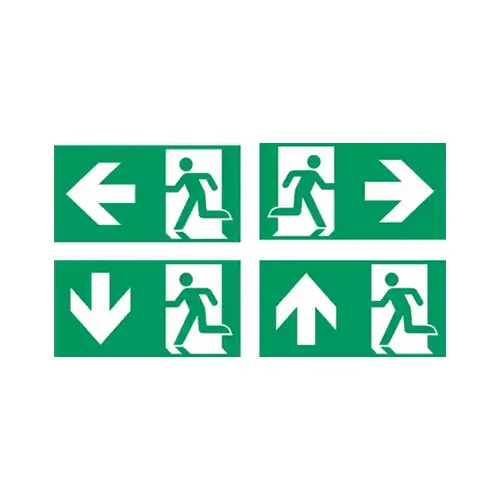
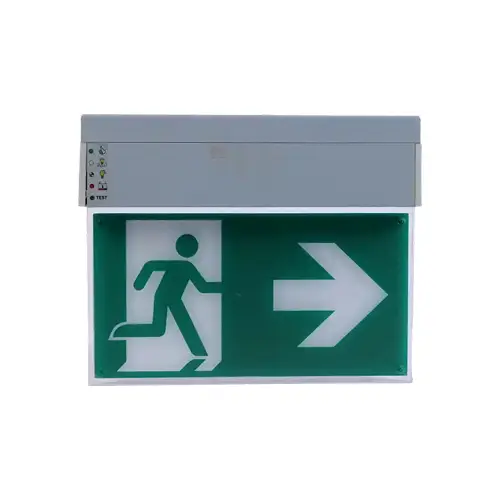
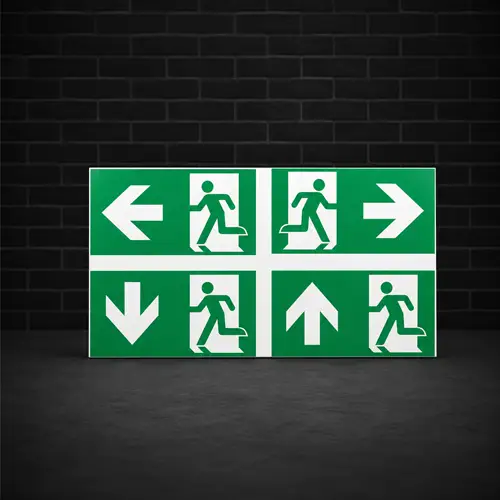
- Emergency Exit Lighting
- Emergency Escape Lighting
- Fire Exit Lights
- Commercial Safety Lighting
- Emergency Route Lighting
- Factory Safety Lights
- Warehouse Safety Lighting
- Building Safety Lighting
- Emergency Illumination Systems
LED Safety Lights can also be integrated with Emergency Exit Signs, Commercial Lighting, Industrial Lighting, and other building safety systems to create a comprehensive emergency lighting strategy that improves occupant protection while supporting long-term operational reliability.
Technical Considerations When Selecting LED Safety Lights
Selecting the right LED Safety Light requires more than choosing an emergency fixture. Since these luminaires are expected to operate during critical situations, buyers must evaluate their reliability, emergency performance, installation environment, and long-term operational efficiency. Proper specification helps ensure dependable emergency illumination while reducing maintenance requirements throughout the building's lifecycle.
Emergency Backup Performance
The primary purpose of an LED Safety Light is to provide illumination when the main power supply is interrupted. The emergency backup system should activate automatically and deliver sufficient illumination to support safe evacuation until normal power is restored or occupants have exited the building.
Reliable emergency operation is one of the most important considerations during product selection.
Battery Reliability
Battery performance directly influences the effectiveness of emergency lighting. A dependable battery system should offer stable backup performance, consistent charging behaviour, and long operational life under normal operating conditions.
Choosing LED Safety Lights with high-quality battery systems helps minimise unexpected failures and supports ongoing building safety requirements.
Light Distribution and Visibility
Emergency lighting is designed to guide people rather than illuminate an entire facility. Proper optical design ensures adequate visibility along evacuation routes, staircases, corridors, emergency exits, and assembly areas without creating excessive brightness or glare.
Uniform illumination helps occupants identify safe escape paths quickly during emergency situations.
Weather and Environmental Protection
Some emergency lighting installations are exposed to dust, humidity, moisture, or challenging industrial conditions. In such environments, selecting LED Safety Lights with appropriate IP-rated protection and durable housing helps maintain dependable performance throughout their service life.
Environmental suitability is especially important in factories, warehouses, transportation facilities, and utility buildings.
Energy-Efficient LED Technology
Although emergency lighting remains in standby mode for extended periods, energy efficiency remains an important consideration. Modern LED technology reduces power consumption during charging while providing reliable illumination during emergency operation.
Lower energy consumption also contributes to improved operational efficiency across commercial and industrial buildings.
Maintenance Accessibility
Emergency lighting systems require periodic inspection and testing to ensure operational readiness. Fixtures designed for easy maintenance, battery replacement, and routine servicing simplify facility management while reducing maintenance costs over the life of the installation.
Performance Factors That Influence LED Safety Light Applications
The effectiveness of an emergency lighting system depends on how well the selected fixture matches the building's operational requirements. Several performance factors influence the suitability of LED Safety Lights for different environments.
Building Type
Every facility has unique emergency lighting requirements.
For example:
- Industrial facilities require dependable illumination across production floors and emergency exits.
- Commercial offices focus on staircases, corridors, and common areas.
- Hospitals require continuous visibility in patient care areas and evacuation routes.
- Educational institutions require safe movement for large numbers of occupants.
- Hotels prioritise guest safety throughout accommodation blocks and common spaces.
Selecting application-specific emergency lighting improves both safety and operational effectiveness.
Installation Location
Emergency lighting may be installed in corridors, stairwells, fire exits, parking structures, service areas, machinery rooms, reception areas, and emergency escape routes. Each location requires appropriate fixture positioning to maximise visibility while maintaining compliance with the overall emergency lighting design.
Proper placement ensures that occupants can quickly identify the safest route during an emergency.
Colour Temperature (CCT)
Colour temperature influences visual clarity during emergency situations.
Typical recommendations include:
- Neutral White for commercial buildings, offices, hospitals, and institutional facilities where balanced visibility is important.
- Cool White for industrial environments, warehouses, logistics centres, and infrastructure projects where enhanced visibility assists rapid movement during evacuation.
The selected CCT should support clear recognition of escape routes, safety signage, and emergency exits.
Glare Control
Emergency lighting should improve visibility without causing visual discomfort. Controlled optics help minimise glare while directing light towards evacuation pathways, staircases, and exits where illumination is most needed.
Comfortable lighting improves decision-making during stressful situations.
Integration with Building Safety Systems
LED Safety Lights perform most effectively when integrated into a comprehensive building safety strategy. They are commonly installed alongside Emergency Exit Lighting, Fire Exit Lights, Emergency Escape Lighting, and other emergency illumination systems to provide complete coverage throughout the building.
This coordinated approach enhances emergency preparedness while improving occupant confidence.
Why Consultants and Facility Managers Specify LED Safety Lights
Emergency lighting systems are essential components of modern commercial and industrial infrastructure. Architects, MEP consultants, EPC contractors, facility managers, and project engineers specify LED Safety Lights because they contribute to occupant safety while offering dependable long-term performance.
Key specification advantages include:
- Automatic emergency illumination during power interruptions.
- Energy-efficient LED technology with reduced operating costs.
- Reliable lighting for evacuation routes and emergency exits.
- Durable construction suitable for commercial and industrial environments.
- Low maintenance requirements through long-life LED components.
- Suitable for healthcare, hospitality, educational, commercial, industrial, and public infrastructure projects.
- Supports comprehensive emergency preparedness strategies.
- Compatible with integrated building safety systems.
These characteristics make LED Safety Lights an important part of modern life-safety infrastructure across a wide range of building types.
Goldwyn's Approach to LED Safety Light Manufacturing
Goldwyn develops LED lighting solutions that combine engineering reliability with practical application requirements. Its LED Safety Lights are designed to support architects, electrical consultants, MEP consultants, EPC contractors, builders, commercial developers, industrial buyers, government organisations, and facility managers seeking dependable emergency lighting solutions.
Goldwyn's manufacturing approach focuses on:
- Emergency lighting solutions designed for commercial and industrial applications.
- Precision-engineered LED luminaires developed for dependable long-term performance.
- Energy-efficient lighting systems that support sustainable building operations.
- Consistent manufacturing and quality control processes.
- Technical assistance for selecting emergency lighting solutions based on project requirements.
- Products suitable for factories, warehouses, healthcare facilities, educational institutions, hospitality projects, commercial buildings, and public infrastructure.
To learn more about Goldwyn's manufacturing capabilities and engineering expertise, visit the About Us page.
For complete project solutions, LED Safety Lights can be integrated with Goldwyn's Industrial Lighting, Commercial Lighting, Emergency Exit Lighting, and other LED lighting systems to create safe, reliable, and energy-efficient environments.
Frequently Asked Questions
1. What is the difference between a Safety Light and an Emergency Exit Light?
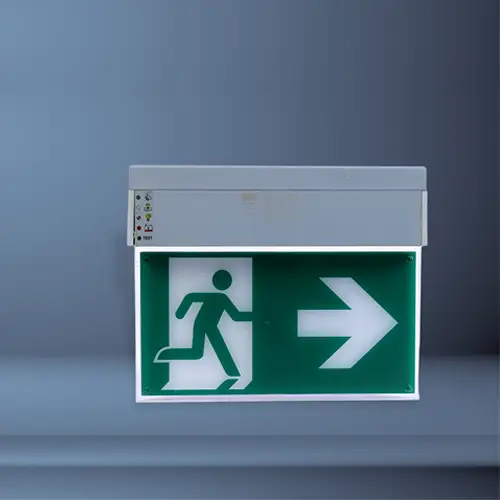
A Safety Light provides emergency illumination for corridors, staircases, workspaces, and evacuation routes, while an Emergency Exit Light primarily identifies exit locations and escape directions. Both systems are commonly used together to create a complete emergency lighting solution.
2. Are LED Safety Lights energy efficient?
Yes. LED Safety Lights use energy-efficient LED technology that consumes less electricity while providing reliable emergency illumination. Their lower power consumption, combined with long LED life, helps reduce operating and maintenance costs over time.
3. What should buyers consider before selecting an LED Safety Light?
Buyers should evaluate battery backup duration, light distribution, IP rating, housing quality, charging performance, emergency operation, maintenance accessibility, installation environment, and compatibility with the overall building safety system before making a selection.
4. Can LED Safety Lights be integrated with building safety systems?
Yes. LED Safety Lights are commonly integrated with emergency exit lights, fire safety systems, emergency escape lighting, and building management systems to provide coordinated emergency illumination across commercial and industrial facilities.
5. How long do LED Safety Lights typically last?
The service life depends on the quality of the LED components, battery system, charging circuitry, thermal management, and operating conditions. Properly engineered LED Safety Lights provide long-term performance with routine inspection and scheduled maintenance.
6. Does Goldwyn supply LED Safety Lights for commercial and infrastructure projects?
Yes. Goldwyn supplies LED Safety Lights for commercial buildings, industrial facilities, hospitals, educational institutions, hospitality projects, public infrastructure, and government developments across India, supporting the requirements of architects, consultants, EPC contractors, and procurement teams.
7. How can I request a quotation for LED Safety Lights?
You can contact Goldwyn by sharing your building layout, emergency lighting requirements, project specifications, quantity requirements, and installation environment. Based on your project needs, the technical team can recommend suitable LED Safety Light solutions and provide a customised quotation.